Serving all of Chester County, PAOpen 24 hours, 7 days a weekEmergency storm calls: (610) 904-8255
Chester County tree service

Bamboo Removal in Chester County: Running Bamboo Dug Out at the Root

We remove running bamboo across Chester County, including stands that have crept under a fence from next door. The canes are cut, and the rhizomes that keep sending up new shoots are dug out.

Bamboo usually arrives as a privacy screen, often planted by a previous owner or the neighbor. A few years later it's coming up in the lawn, under the deck, through the edge of the driveway and on the far side of the fence. Mowing and cutting slow it down for a season, and then it comes back.

The canes aren't the problem. The rhizomes are: a mat of underground stems that runs sideways through the soil and stores enough energy to keep pushing up new shoots. Getting rid of bamboo for good means getting those rhizomes out of the ground.

Running vs. clumping bamboo

Bamboo comes in two growth types. Running bamboo, such as the Phyllostachys species that includes golden bamboo, spreads by long rhizomes that can travel well beyond the original planting and send up canes wherever they surface. Clumping bamboo, such as Fargesia, grows in a tight, slowly expanding clump and stays where it was planted.

If bamboo is showing up in places nobody planted it, it's a running type. That's the kind that crosses property lines, and it's what most bamboo removal is about.

Why cutting bamboo down doesn't kill it

Every cane is connected to the rhizome network below. Cutting the canes takes away the leaves, but the rhizomes still hold stored energy and push up new shoots, often within weeks during the growing season.

Cutting and mowing every new shoot, season after season, will eventually wear a stand down, but it takes years of steady effort, and any rhizome left alone keeps the stand alive. For most people, removing the rhizomes is the only practical way to be done with it.

How bamboo removal works

The canes are cut at ground level and run through the chipper or hauled away. Then the rhizome mat is dug out, by machine where there's room and by hand near foundations, fences, patios and the roots of trees you want to keep. Rhizomes mostly run in the upper layer of soil, which is what makes digging them out practical.

Pieces of rhizome left in the soil can sprout, so the dug area is raked and sorted to pull out as much as possible. Even after a careful job, plan to watch the area through the next growing season and pull or cut any shoot that appears while it's still small.

Bamboo coming from next door

A lot of bamboo problems start on someone else's property. If your neighbor's stand is spreading into your yard, removing the bamboo on your side solves today's problem, but new rhizomes will keep crossing the line as long as the source stays.

Start with a conversation, ideally in writing. Some Chester County townships have adopted rules on running bamboo, so it's worth asking your township or borough whether yours has one. Whether you can recover costs from a neighbor is a legal question for a Pennsylvania attorney.

Rhizome barriers

When bamboo next door is staying, a rhizome barrier along the property line is the usual way to keep it out. It's a continuous wall of heavy plastic sheeting set vertically in a trench, with the top edge left slightly above the soil so rhizomes trying to cross over it can be seen and cut.

Barriers need upkeep. Seams have to be sealed, and the top edge should be checked each year for rhizomes trying to cross over. A barrier with a gap or a buried top edge won't hold a running bamboo for long.

Before you spray, tarp or burn

Plenty of home remedies get suggested for bamboo, and most of them only affect what's above ground. Boiling water and vinegar kill the shoots they touch but don't reach the rhizome mat. Tarps can suppress shoots under them, but rhizomes often run out past the edges and come up elsewhere. Burning the canes leaves the rhizomes underground untouched.

Herbicide on regrowth can weaken a stand over time, but it usually takes repeated applications across more than one season, and it has to be kept off plants you want to keep.

Where we do bamboo removal

From the West Chester office we cover all of Chester County. Local pages for West Chester and the nearby townships, Exton, Downingtown, Malvern, Paoli & Berwyn, Kennett Square & Unionville, Phoenixville, Coatesville and Chester Springs & Glenmoore explain what tree work looks like in each part of the county, and the full list of Chester County service areas covers the rest.

Related tree services

  • Land & Lot Clearing: Lots, fence lines, overgrown acreage and brush cleared for building, pasture or a usable yard.
  • Stump Grinding: Stumps ground below grade so you can mow, plant or regrade, with the chips cleaned up or left for mulch.

How it works

How a bamboo removal job runs

  1. Show us the stand

    Call any time or send photos of the bamboo and where it's coming up. Let us know if it's spreading from a neighbor's property.

  2. Free estimate

    We walk the area, find where the rhizomes are running, and check what's nearby: fences, foundations, patios, utility lines and trees you want to keep.

  3. Cut and dig

    Canes are cut and chipped or hauled away, then the rhizome mat is dug out by machine or by hand, depending on access.

  4. Cleanup and regrowth watch

    The area is cleaned up and leveled. Watch it through the next growing season and remove any shoots from leftover rhizome pieces while they're small.

Bamboo Removal questions

How can I get rid of bamboo in my yard?

Cut the canes, then remove the rhizomes, the underground stems that send up new shoots. Small patches can be dug out by hand with a spade and a mattock. Large or old stands usually need machine digging. Either way, watch the area for at least a season afterward and remove new shoots right away. If the bamboo is coming from next door, a rhizome barrier along the line keeps it from coming back.

Can bamboo be permanently removed?

Yes. Running bamboo can be removed for good if the rhizomes are dug out and any regrowth from missed pieces is caught over the following season. Where people struggle is when only the canes are cut, or when a neighbor's stand keeps sending rhizomes across the property line. In that case, removal on your side needs a barrier to stay finished.

How deep do bamboo roots grow?

Bamboo rhizomes mostly run fairly shallow, in the upper layer of soil, and spread sideways rather than down. That's why digging is effective and why a rhizome barrier works as a vertical wall. The fibrous roots hanging off the rhizomes go somewhat deeper but don't sprout on their own. The rhizome mat is the part that has to come out.

Will putting a tarp over bamboo kill it?

Rarely on its own. A tarp can suppress shoots in the covered area, but bamboo rhizomes run sideways and often come up past the edges. The stand underneath is weakened, not removed, and shoots can push up again when the tarp comes off. Tarping can help after the canes are cut and the main mat is dug, as a way to watch for regrowth.

Can you just cut down bamboo?

You can, but it won't stay gone. Cutting removes the canes, while the rhizomes underground keep their stored energy and push up new shoots, often within weeks during the growing season. Cutting every shoot as it appears will wear a stand down eventually, but it usually takes years. Digging out the rhizomes is what ends it.

How to stop neighbor's bamboo from spreading?

Talk to your neighbor first, ideally with a written note, since they may not realize it's crossing the line. On your side, remove the bamboo and rhizomes that have already spread, then install a rhizome barrier along the property line. Check the barrier's top edge every year. Also ask your township or borough whether it has a rule on running bamboo, since some Chester County municipalities have adopted them.

Can you sue a neighbor for bamboo growing in your yard?

That's a legal question, and the answer depends on the facts and on any local ordinance, so talk to a Pennsylvania attorney. Many disputes settle once both sides see the problem in writing. Dated photos of where the bamboo is coming up and a written removal estimate help document the situation, whichever way it goes.

Why is bamboo so hard to remove?

Because the plant lives underground. Running bamboo spreads through a network of rhizomes that store energy and send up new canes, so cutting the tops barely sets it back. Small pieces of rhizome left in the soil can sprout into new plants. The job is only finished when the rhizome mat is out and no new shoots appear through a growing season.

What does invasive bamboo look like?

Running bamboo has jointed, woody canes with leaves in fan-like sprays, and it grows in a stand that keeps widening. The tell-tale sign is new shoots popping up well away from the main stand, in the lawn, under a deck or on the other side of a fence. Dig near one of those shoots and you'll usually find a long horizontal rhizome connecting it back to the stand.

Free estimates · open 24/7

Tree problem in Chester County? Get it handled.

Call the West Chester office day or night, or send a few details and a photo for a free written estimate. Dan Flynn and the crew cover every township in Chester County.

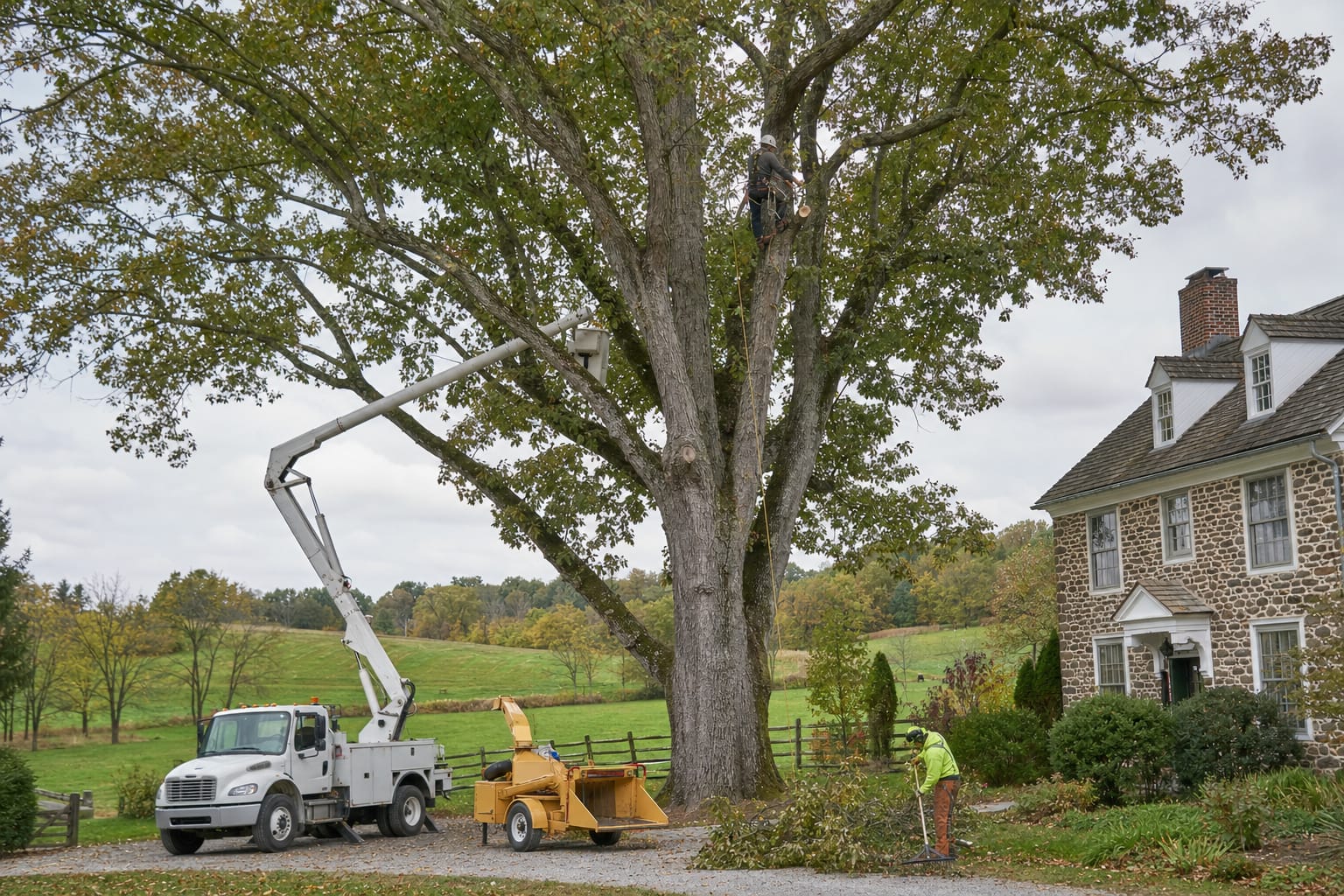
Tree crew working on a large oak beside a Chester County stone farmhouse
Call 24/7Free Estimate